Rover Systems
Mechanical, electrical, and software breakdown of the rover fleet.
Key Design Features
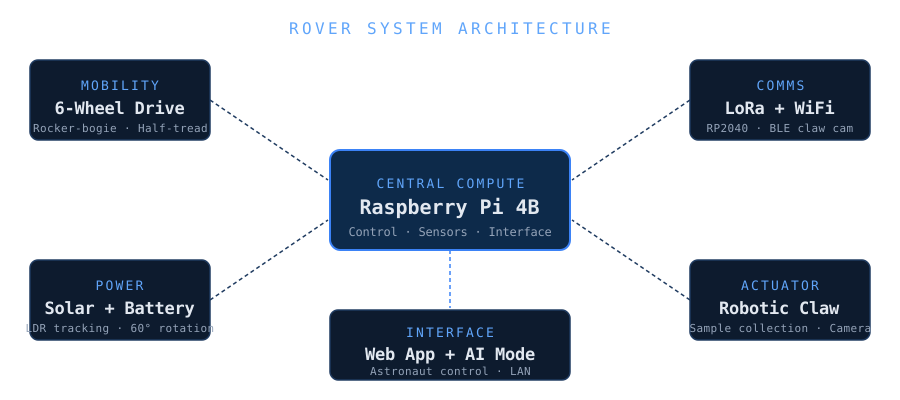
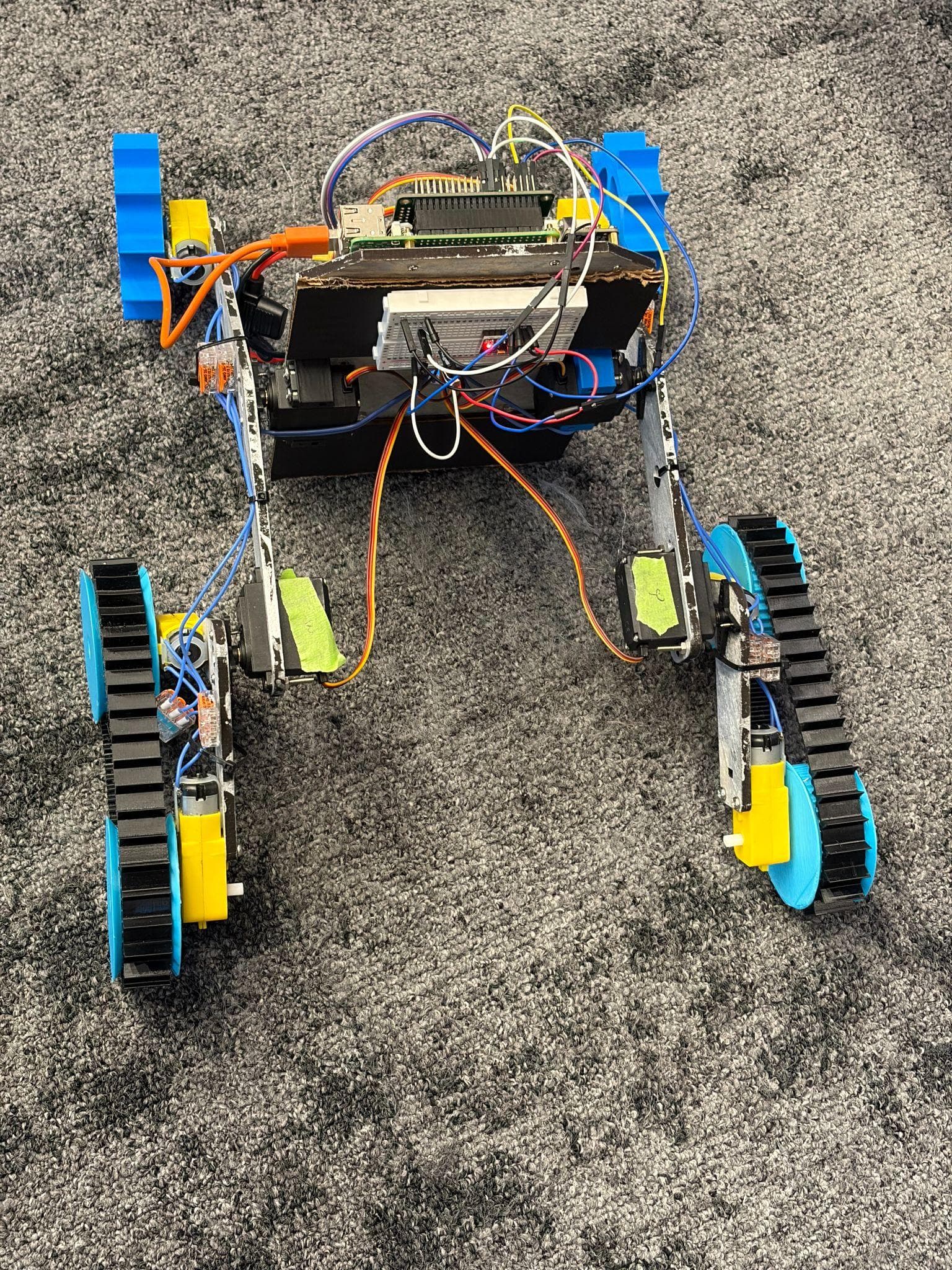
| Suspension | Rocker-bogie with active solar tracking. Handles harsh terrain while keeping components upright. |
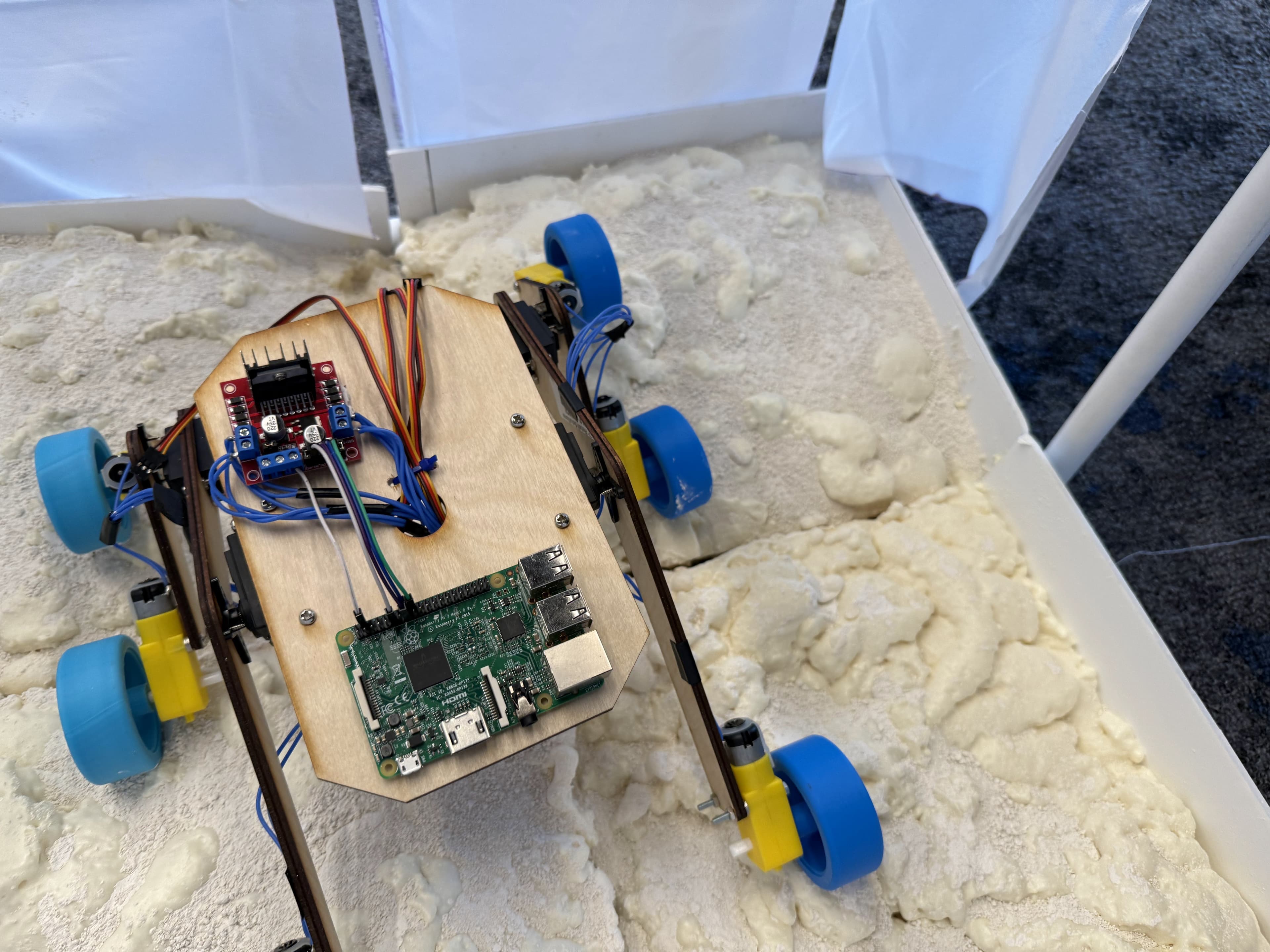
| Wheels | Half-tread system for increased grip on coarse regolith and rocky terrain. |
| Solar | Underside-mounted panels with 60° rotation to maximize capture at low sun angles. |
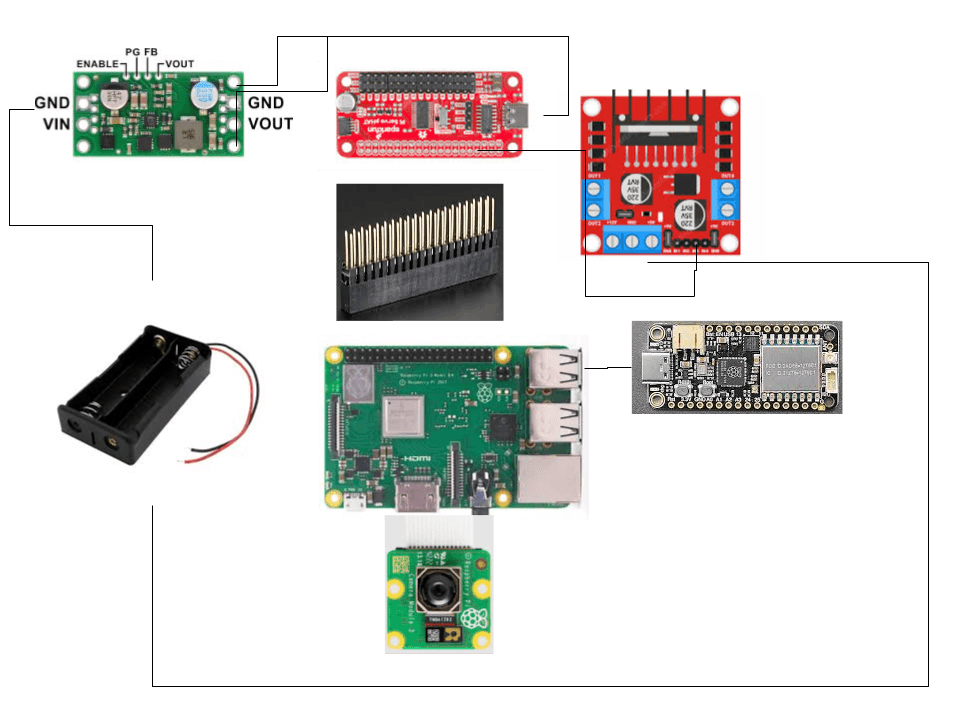
| Motors | 6 independently-controlled DC motors, one per wheel, each with a dedicated controller. |
| Compute | Raspberry Pi 4B running the control system and sensor processing. |
| Claw | Robotic sample collection arm with camera for precise remote guidance. |
Communication Systems
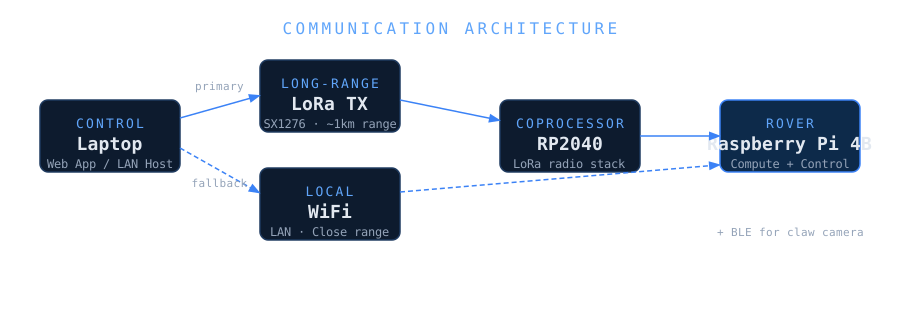
Three protocols cover different ranges and use cases. The system falls back automatically from WiFi to LoRa when the rover moves out of range.
Local area network hosted on a laptop. No internet needed. Primary link for close operations.
Long-range radio fallback. Used when WiFi signal drops. Low-power, no infrastructure needed.
Bluetooth for close-up video transfer from the claw-mounted camera.
Control flow: Laptop App → LoRa Transmitter → LoRa Receiver → Rover — Commands are packaged for reliable transmission, sent wirelessly, and acted on automatically.
Mobility & Suspension
6-wheel drive
- Full control across loose, uneven terrain
- Half-tread design for stability on granular surfaces
- Each wheel has its own dedicated controller
Suspension
- Low center of gravity for balance on slopes
- Front wheels climb obstacles, rear holds steady
- Even weight distribution across all wheels
- Adjusts dynamically for terrain
Robotic Claw
Collects loose soil and rocks for mining and sample collection tasks. A camera mounted on the claw gives the operator a clear view for precise positioning. Controlled via LoRa or WiFi depending on range.
LDR Solar Tracking
A light-dependent resistor on the underside reads ambient light levels. The Raspberry Pi processes readings to find the strongest direction, then the rover repositions itself to maximize solar panel exposure.